Views: 0 Author: Site Editor Publish Time: 2026-09-01 Origin: Site
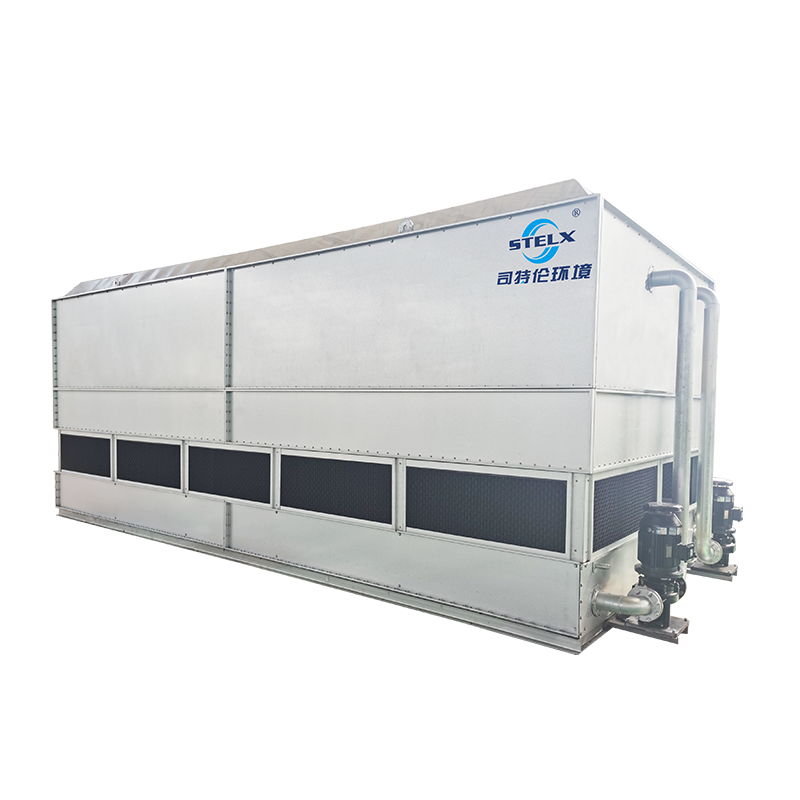
Facility managers constantly battle rising energy costs while facing heavy thermal demands from large-scale cooling operations. Industrial plants generate massive amounts of heat. Managing this thermal load efficiently often dictates overall operational profitability. Enter the hybrid heat rejection solution. An Evaporative Condenser elegantly merges the mechanics of a cooling tower and a standard condenser into a single, compact footprint. It condenses refrigerant gas inside a coil bundle while water continuously sprays over the exterior.
We will explore the underlying thermodynamic principles behind this critical equipment. You will discover practical implementation realities, essential maintenance needs, and strict compliance requirements. Facility engineers and procurement teams must thoroughly grasp these details. Evaluating initial capital expenditures against ongoing operating expenses requires a clear understanding of these mechanics. Read on to learn how this technology maximizes cooling capacity and drives facility efficiency.
An evaporative condenser utilizes the latent heat of vaporization, rejecting system heat at lower condensing temperatures than dry systems.
The system operates through a continuous three-part cycle: high-pressure refrigerant gas circulation, continuous water spray, and forced or induced airflow.
Compared to traditional setups, these units significantly reduce compressor energy consumption but require strict water quality management and winterization protocols.
System viability depends heavily on local wet-bulb temperatures, available footprint, and the specific thermal load of the industrial refrigeration system.
To fully appreciate the efficiency of an evaporative condenser system, we must break down its thermodynamic cycle. The equipment relies on a continuous interplay between refrigerant, water, and air. This process rejects heat far more effectively than air cooling alone.
The cycle begins directly after the compression stage. Superheated refrigerant vapor leaves the compressor and enters the internal condenser coil bundle. This vapor carries the combined thermal load of the facility alongside the heat of compression. As the hot gas travels through the heavy-duty tubing, thermal energy transfers through the tube walls. The exterior surface of the coils becomes highly heated. The goal now is to strip this heat away as rapidly as possible to condense the gas back into a liquid state.
Simultaneously, a dedicated circulation pump drives water from a collection basin at the bottom of the unit. The pump forces this water up to a distribution spray header located directly above the hot coil bundle. Large nozzles continuously spray this water downward. The water cascades over the entire surface area of the coils. As the water washes over the hot metal, it absorbs the sensible heat from the internal refrigerant. This continuous deluge ensures the coils remain thoroughly wetted, which prevents dry spots and maximizes thermal transfer.
The magic of the system occurs in the third phase. Heavy-duty fans—either axial or centrifugal—force or induce ambient air through the unit. This air travels upward, moving against the downward flow of the falling water. As the dry ambient air meets the heated water cascading over the coils, a small fraction of that water evaporates.
This phase change from liquid to gas requires a massive amount of energy. It removes the latent heat of vaporization from the system. Because latent heat transfer is incredibly powerful, it aggressively cools the remaining water on the coil. This highly efficient cooling action forces the internal refrigerant gas to rapidly condense back into a high-pressure liquid. The liquid refrigerant then exits the coil bundle, ready to recirculate through the facility's expansion valves.
Decision-makers must evaluate equipment based on specific environmental and operational constraints. You cannot select an industrial refrigeration condenser blindly. Let us compare the evaporative approach against two standard alternatives.
Air-cooled units rely entirely on ambient air blowing across dry coils. They offer a simpler setup but struggle heavily in warm climates.
Efficiency: Evaporative units operate based on the ambient wet-bulb temperature. Wet-bulb temperatures are almost always lower than dry-bulb temperatures. This allows evaporative units to achieve significantly lower condensing temperatures. Consequently, the compressors draw much less energy. Air-cooled units, bound by higher dry-bulb temperatures, force compressors to work harder, consuming vastly more electricity.
Trade-off: The efficiency of evaporative cooling comes with a strict maintenance tax. Evaporative units require constant water usage, chemical treatment, and blowdown management. Air-cooled units operate completely dry, eliminating water costs and chemical handling entirely.
Large facilities sometimes use a two-part system: a remote cooling tower paired with an indoor water-cooled condenser. This dual setup presents several distinct challenges.
Footprint & Piping: An evaporative condenser merges these two components into one single piece of equipment. This drastically reduces the overall system footprint. It eliminates the need for a secondary heat exchanger. You also avoid routing massive chilled water pipes throughout the facility, which minimizes pump energy requirements.
Cost: Consolidating the heat rejection process into one unit often results in lower initial capital expenditures (CAPEX). Installation complexity drops significantly when you only need to rig, pipe, and wire a single exterior unit rather than coordinating a dual-unit system.
Below is a summary chart illustrating the core differences between these three primary heat rejection methods.
System Type | Energy Efficiency | Water Consumption | Footprint | Maintenance Complexity |
|---|---|---|---|---|
Evaporative Condenser | High (Follows Wet-Bulb) | Moderate to High | Compact (All-in-one) | High (Water Treatment) |
Air-Cooled Condenser | Low (Follows Dry-Bulb) | Zero | Large | Low (Cleaning only) |
Cooling Tower + Condenser | High | High | Very Large (Dual units) | High (Multiple components) |
Technical functionality must translate into tangible business outcomes. Engineers and executives must balance operational expenses against output reliability. Evaluating these trade-offs ensures the chosen equipment aligns with the facility's long-term financial goals.
The primary financial driver for evaporative cooling is aggressive energy reduction. Thermodynamics dictate that lowering the condensing temperature relieves the workload on the refrigeration compressors. As a general rule of thumb, every 1°F drop in condensing temperature yields approximately a 1% to 2% reduction in total compressor energy usage. Over a year of continuous heavy-duty operation, this translates to massive electrical savings.
However, you must balance these energy savings against specific water-related operating expenses. Evaporative cooling consumes water continuously. You must account for the cost of make-up water to replace what evaporates. Furthermore, to prevent mineral concentration, the system must bleed off water (blowdown) to the drain. You must budget for municipal discharge fees and the ongoing cost of proprietary water treatment chemicals. Proper financial modeling weighs the electrical savings against these direct water and chemical costs.
Certain industries extract maximum value from this technology. Food processing plants, breweries, and massive cold storage warehouses often run heavy-duty industrial systems. These facilities frequently utilize natural refrigerants like ammonia (R-717) and carbon dioxide (R-744). Evaporative condensers are highly compatible with these refrigerants, often featuring specialized stainless steel or heavily galvanized coil bundles to handle high pressures and corrosive environments.
In food manufacturing, maintaining strict temperature tolerances is non-negotiable. Stable, exceptionally low condensing temperatures protect product integrity. During peak summer thermal loads, air-cooled systems often struggle, leading to temperature spikes inside the plant. Evaporative systems effortlessly reject heat even on the hottest days, ensuring production lines never slow down due to refrigeration bottlenecks.
Despite their superior efficiency, these systems carry distinct vulnerabilities. Transparency regarding these risks is critical. Implementing robust mitigation strategies ensures long-term operational success and protects the capital investment.
Water quality dictates the lifespan and efficiency of the equipment. As pure water evaporates, it leaves behind dissolved minerals like calcium and magnesium. If unmanaged, these minerals rapidly form hard scale on the exterior of the hot coil bundle.
The Insulator Effect: Mineral scale acts as a powerful thermal insulator. Even a millimeter of scale destroys heat transfer efficiency, forcing the compressors to work harder and defeating the purpose of the equipment.
Chemical Programs: Facilities must implement a rigorous, automated chemical treatment program. This prevents scale formation and controls corrosion on the metal surfaces.
Automated Blowdown: To manage "cycles of concentration," sensors monitor the electrical conductivity of the basin water. Once mineral levels peak, an automated valve dumps a portion of the concentrated water to the drain, replacing it with fresh make-up water.
Warm, aerated water creates an ideal breeding ground for biological growth, including algae and dangerous bacteria. The most severe risk is the proliferation of Legionella pneumophila, the bacteria responsible for Legionnaires' disease. Facility managers carry a strict legal and ethical burden to prevent bacterial outbreaks.
Compliance with ASHRAE Standard 188 is mandatory in many jurisdictions. This standard dictates the creation of a comprehensive water management program. Facilities must utilize automated biocide dosing systems, conduct regular water testing, and maintain meticulous hygiene logs to ensure the mist drifting from the unit remains completely safe.
Operating a wet system during sub-freezing winters presents severe freezing risks. If the basin water or the coil bundle freezes, the expansion of the ice will rupture the heavy-duty tubing, causing catastrophic refrigerant leaks.
Proper winterization requires specific engineering controls. Many northern facilities utilize remote indoor sumps, draining the exterior water basin entirely when the pump shuts off. If an indoor sump is impossible, high-wattage basin heaters become mandatory to keep the standing water liquid. Additionally, fans must equip Variable Frequency Drives (VFDs). VFDs allow the system to slow fan speeds, managing cooling capacity carefully so the equipment does not overcool and freeze during sub-zero operation.
Selecting the correct heat rejection strategy requires an actionable evaluation framework. You must assess your specific site conditions before committing to an evaporative solution.
Climate Data: Assess your local design wet-bulb temperatures. Climates with exceptionally high humidity (where wet-bulb and dry-bulb temperatures closely align) reduce the evaporative advantage. Conversely, hot and dry climates allow these units to perform with staggering efficiency.
Resource Availability: Evaluate your local utility rates. If local water costs are exorbitant or municipal discharge regulations heavily restrict blowdown, a dry system might prove financially superior despite higher electrical draws.
Load Profile: Analyze your facility's thermal load fluctuations. Match equipment capacity controls—such as fan cycling, VFDs, and dampening—to your specific partial and peak load requirements. An oversized system running at partial loads can waste significant pump energy.
Do not rely on guesswork. We highly recommend commissioning a rigorous lifecycle cost analysis (LCCA) from an experienced industrial refrigeration system engineer. This analysis should directly compare a 10-year operating expense model of an evaporative setup against a baseline air-cooled system. Factoring in local utility rates, chemical costs, and maintenance labor will clearly reveal the most profitable path forward.
Navigating industrial heat rejection requires balancing raw efficiency with maintenance realities. Evaporative condensers remain unparalleled in their ability to harness latent heat, offering massive energy efficiency for heavy industrial loads. They drastically lower condensing temperatures and relieve the electrical burden on facility compressors. However, they demand strict, ongoing water management, rigorous chemical treatment, and careful winterization to maintain that efficiency. By accurately assessing your local climate and resource availability, you can determine if the operational savings justify the maintenance requirements. We prompt you to consult directly with a refrigeration systems integrator to run a site-specific thermodynamic and financial model for your plant.
A: These units are highly versatile and commonly support natural refrigerants like ammonia (R-717) and carbon dioxide (R-744), which are standard in heavy industrial processing. They also seamlessly operate with traditional commercial halocarbons (HFCs/HFOs). The coil materials are specifically engineered to handle the distinct pressures and corrosive properties of the selected refrigerant.
A: As a standard baseline, these systems evaporate approximately 3 gallons per minute (GPM) for every 100 tons of heat rejection capacity. You must also factor in the blowdown water sent to the drain. Depending on your water quality and cycles of concentration, total water consumption can increase by 20% to 50% above the base evaporation rate.
A: Yes, many units feature a "dry mode" for sub-freezing conditions. The circulation pump deactivates, draining the water basin. The unit then relies solely on ambient air blowing across the coils to reject heat. Because capacity drops significantly without water, dry mode is only feasible when winter ambient temperatures are exceptionally low and facility thermal loads decrease.
A: With rigorous maintenance, you can expect a lifespan of 15 to over 20 years. Longevity heavily depends on your water treatment program. Poor chemical management causes rapid corrosion. Material selection also matters; heavy-gauge stainless steel construction naturally outlasts standard galvanized steel in aggressive industrial environments.