Views: 0 Author: Site Editor Publish Time: 2026-01-12 Origin: Site
Selecting the right refrigerant for your industrial air cooler can make or break your system's efficiency and sustainability. Ammonia and CO₂ are two of the most eco-friendly refrigerants, but which is best for your needs?
In this article, we will compare ammonia and CO₂ based on environmental impact, energy efficiency, safety, and cost. This will help you choose the right refrigerant, ensuring your system meets both performance and regulatory goals.
Stelx offers industrial air coolers designed to maximize energy savings while maintaining cooling performance. Learn more about our air coolers.
One of the most significant factors driving the shift towards natural refrigerants like ammonia and CO₂ is their minimal impact on the environment. Ammonia and CO₂ both have a GWP (Global Warming Potential) of 0 and 1, respectively, making them vastly more environmentally friendly compared to synthetic refrigerants like HFCs (Hydrofluorocarbons), which can have a GWP of over 1,000.
Ammonia’s GWP of 0 means it does not contribute to global warming, which is a crucial consideration for industries striving to reduce their carbon footprint. CO₂, with a GWP of 1, is the baseline for comparison, making it a sustainable choice, although not as environmentally neutral as ammonia.
For more details on GWP and ODP standards, refer to the United Nations Environment Programme (UNEP)
Refrigerant | Global Warming Potential (GWP) | Ozone Depletion Potential (ODP) |
Ammonia (R-717) | 0 | 0 |
CO₂ (R-744) | 1 | 0 |
HFCs (e.g., R-404A) | 1,000+ | >0 |
Both ammonia and CO₂ also have zero Ozone Depletion Potential (ODP). This is especially relevant given the global efforts to phase out ozone-depleting substances, such as CFCs and HCFCs. Using natural refrigerants that do not harm the ozone layer is essential for industries that are aiming to comply with international environmental agreements.
Tip: When selecting a refrigerant, consider not only the GWP but also the ODP, as these two factors play a significant role in your facility's long-term sustainability and regulatory compliance.
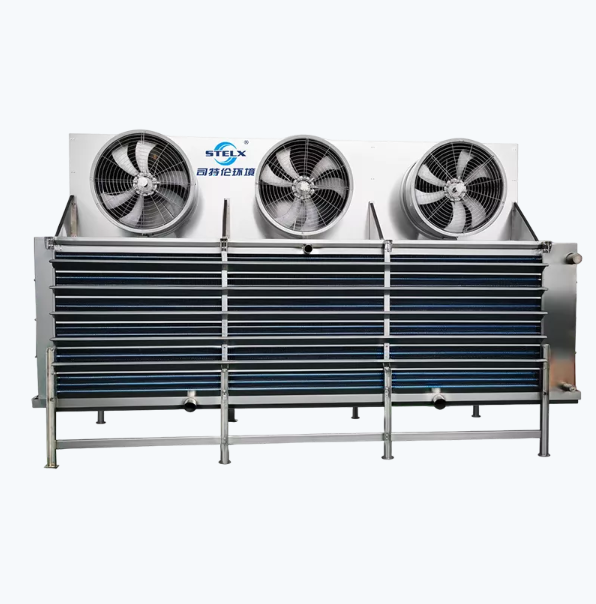
Ammonia has been a staple in industrial refrigeration for over 100 years, and its thermodynamic efficiency is one of the primary reasons for its long-standing popularity. Ammonia has a high latent heat of vaporization, meaning it can absorb and release large amounts of heat with less refrigerant. This makes ammonia an excellent choice for large-scale applications such as cold storage and food processing plants.
The efficiency of ammonia systems translates into lower energy consumption. In fact, ammonia-based systems are typically 10-15% more energy-efficient than equivalent HFC systems, which leads to significant savings over time.
Additionally, modern air coolers engineered with corrosion-resistant materials, such as stainless steel and aluminum alloys, help maximize performance and lifespan. These materials are key in creating robust refrigeration systems that can withstand demanding environments and harsh conditions, ensuring long-term operational reliability.
CO₂, although slightly less efficient than ammonia in terms of thermodynamics, excels in low-temperature applications. In particular, CO₂ performs exceptionally well in cascade systems where it is used for cooling in the low-temperature stage, with ammonia handling the high-temperature stage. CO₂ is also an ideal refrigerant for subcritical and transcritical systems, which operate well in colder climates or areas where energy efficiency in low-temperature cooling is critical.
In low-temperature freezer applications, CO₂ can reduce energy costs and achieve temperatures that would otherwise be difficult to reach with conventional refrigerants.
Tip: For industrial air coolers focusing on low-temperature cooling, CO₂’s energy efficiency and performance in subcritical conditions can provide substantial operational savings.
Refrigerant | Energy Efficiency | Best Use Cases | Ideal Temperature Range |
Ammonia | 10-15% more efficient | Large-scale facilities, multi-temperature applications | Wide range: -60°F to +40°F |
CO₂ | Lower than ammonia, but effective in subcritical mode | Cold storage, freezers, cascade systems | Best in cold climates: -20°F to -40°F |
The initial capital investment for an industrial refrigeration system is always a significant consideration. Ammonia systems tend to have a higher upfront cost compared to CO₂ systems, due to the need for specialized components and safety features such as leak detection and ventilation systems. However, this additional cost is often outweighed by the long-term energy savings ammonia systems provide.
On the other hand, CO₂ systems generally come with a lower initial cost than ammonia systems. CO₂ systems are more compact, requiring smaller refrigerant charges and simpler components, which can reduce installation costs. This can make CO₂ systems an attractive option for smaller facilities or those with more limited budgets.
When it comes to operating costs, ammonia systems generally have the advantage. The energy efficiency of ammonia-based systems means they consume less energy, resulting in lower operating costs. In large-scale applications, this can translate into significant savings. Additionally, ammonia systems typically have a longer lifespan, which contributes to a lower total cost of ownership.
In contrast, CO₂ systems have higher operational costs in warmer climates. Energy consumption can increase when CO₂ systems operate in transcritical mode, especially in areas with higher ambient temperatures. However, CO₂’s low refrigerant cost (compared to ammonia) can help mitigate some of these higher operating costs.
Tip: Ammonia’s energy efficiency is an important consideration for large-scale facilities, as it offers long-term savings in both energy and maintenance costs.
Ammonia, while highly efficient, is toxic and flammable at certain concentrations. This makes safety a primary concern when using ammonia in industrial refrigeration systems. However, over the years, modern ammonia systems have been designed with advanced safety features, including secondary containment, leak detection, and ventilation systems to reduce risks.
Industrial air coolers that integrate adaptive defrost systems and corrosion-resistant materials contribute to making ammonia-based cooling solutions safer and more reliable in challenging environments. These systems offer better control over potential risks, improving the overall safety profile of large-scale ammonia refrigeration installations.
In facilities with ammonia systems, trained personnel are required to handle the refrigerant, and regular maintenance checks must be conducted to ensure safety. Regulatory compliance for ammonia systems is more stringent, especially in facilities handling large amounts of refrigerant.
CO₂, by contrast, is non-toxic and non-flammable, which makes it safer to handle than ammonia. However, because CO₂ is heavier than air, it can accumulate in confined spaces and create a suffocation hazard if proper ventilation is not in place. CO₂ systems also require gas detection systems to monitor CO₂ concentrations and ensure the safety of workers.
Despite these risks, CO₂’s safety profile is generally considered more manageable compared to ammonia, particularly for smaller applications.
Tip: When choosing between ammonia and CO₂, safety features such as leak detection, ventilation, and gas monitoring should be a critical factor in your decision-making process, depending on your facility's size and application type.
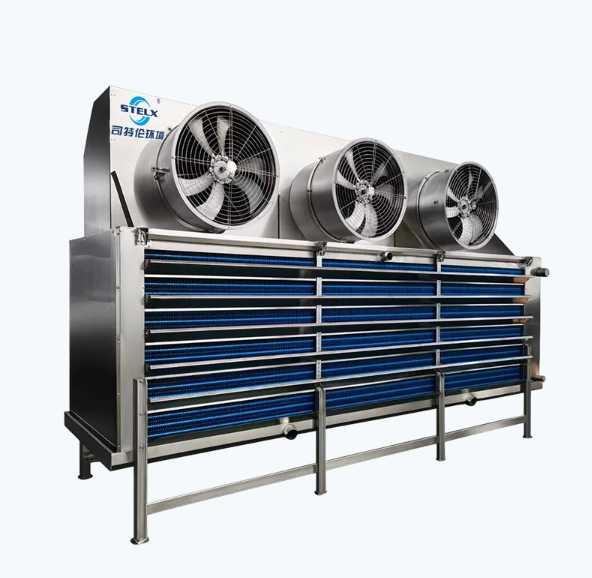
Ammonia is well-suited for large industrial facilities with extensive refrigeration needs. These include:
● Cold storage warehouses
● Food and beverage processing plants
● Industrial ice production
● Petrochemical and pharmaceutical facilities
Ammonia’s high thermodynamic efficiency and ability to handle varying temperature ranges make it ideal for facilities requiring high-capacity refrigeration systems. Modern air coolers optimized for ammonia applications help streamline these complex systems by integrating flexible refrigerant options, ensuring efficiency across multiple temperature conditions.
CO₂ is better suited for smaller-scale applications and those requiring low-temperature cooling. Common uses include:
● Supermarkets and commercial refrigeration
● Cold storage in colder climates
● Cascade refrigeration systems where CO₂ works in conjunction with ammonia
CO₂’s low toxicity and non-flammable properties also make it a good choice for systems in public spaces or food processing applications where safety is a top priority.
Tip: For businesses in colder climates or those focusing on low-temperature cooling, CO₂ can be a cost-effective and sustainable refrigerant.
When deciding between ammonia and CO₂ for your industrial air cooler, several factors need to be considered:
● Facility size: Larger facilities with high refrigeration demands are often better suited to ammonia.
● Climate: CO₂ works well in cold climates, while ammonia excels in warmer regions with larger refrigeration loads.
● Regulatory compliance: Both refrigerants offer long-term sustainability, but ammonia requires more stringent safety protocols.
As environmental regulations around global warming potential (GWP) and ozone depletion become stricter, natural refrigerants like ammonia and CO₂ are more likely to remain compliant over the long term. While HFC refrigerants face phase-outs due to their high GWP, ammonia and CO₂ are poised to remain key players in the industrial refrigeration sector.
Choosing the best refrigerant for your industrial air cooler depends on your specific needs. Ammonia is ideal for large facilities requiring high efficiency and long-term savings, while CO₂ suits smaller-scale, low-temperature applications with its cost-effectiveness and safety features. Both refrigerants offer sustainable solutions that reduce your carbon footprint. As environmental regulations evolve, Stelx provides air coolers that support both refrigerants, offering energy-efficient and customizable options for industrial refrigeration needs.
A: Ammonia offers higher energy efficiency for large-scale systems, while CO₂ is better for low-temperature applications due to its cost-effectiveness and safety features.
A: Ammonia is ideal for large facilities requiring high energy efficiency and long-term cost savings, especially in multi-temperature applications.
A: Both ammonia and CO₂ have low global warming potential (GWP), making them eco-friendly choices for industrial air coolers compared to HFCs.
A: Ammonia systems are typically more energy-efficient, leading to lower long-term operating costs, while CO₂ systems may be more affordable upfront but cost more in warmer climates.


