Views: 0 Author: Site Editor Publish Time: 2026-09-29 Origin: Site
When standard cooling equipment fails in sub-zero applications, the stakes run incredibly high. Product loss and facility downtime rapidly drain revenue. Cold storage demands absolute reliability from every single component.
Environmental stressors push Axial Fans to their absolute limits. Extreme cold forces standard materials to crack and shatter. High humidity during defrost cycles introduces severe moisture into sensitive electronics. Subsequent freezing creates heavy ice accumulation across moving parts.
This guide provides a comprehensive evaluation framework for selecting highly reliable fans. You will learn how to navigate low-temperature environments successfully. We focus extensively on motor protection, anti-icing technologies, and operational longevity.
Standard fans fail in sub-zero environments due to frozen bearings, brittle materials, and ice bridging; specialized hardware is mandatory.
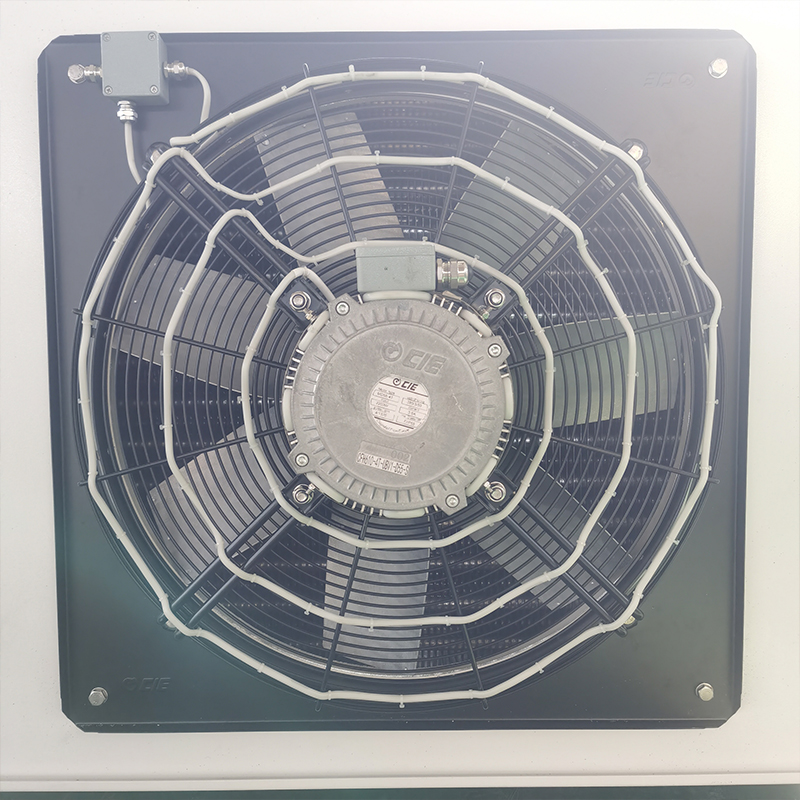
Fan ring heaters are critical for preventing ice buildup between the blade tips and the casing, avoiding catastrophic blade shatter or motor stall.
Effective motor protection requires high IP ratings (IP66+) to survive harsh defrost cycles and low-temperature lubricants that maintain viscosity below -40°C.
Evaluating low temperature axial fans requires balancing aerodynamic efficiency with frost-shedding capabilities and robust material selection.
Operating a commercial cold room involves strict temperature tolerances. Financial and operational impacts scale rapidly when a blast freezer air cooler experiences a fan failure. Spoilage of high-value inventory like seafood or pharmaceuticals happens within hours. Emergency maintenance in -30°C conditions poses severe safety risks to technicians. Furthermore, reduced freezing efficiency forces compressors to work harder, increasing energy consumption and accelerating wear across the entire refrigeration cycle.
Sub-zero environments exploit minor design weaknesses. You must understand how standard equipment degrades to select better alternatives. The most frequent points of failure fall into three categories:
Mechanical: Ice bridging occurs when frost fills the narrow gap between the blade tip and casing. This physically locks the blade in place.
Electrical: When ice locks the blades, the motor rotor cannot turn. The stator draws excessive current, causing catastrophic motor burnout.
Material: Standard plastics possess a high glass transition temperature. They become highly brittle in extreme cold and shatter under normal operational vibration.
Reliability requires strict benchmarks. A successful cold storage fan installation must deliver consistent airflow despite heavy frost conditions. The equipment must survive thousands of extreme thermal shocks during daily defrost cycles. Ultimately, facility managers should aim for zero unplanned downtime between scheduled annual maintenance windows.
Ice bridging represents the most common mechanical threat in freezing applications. The tightest clearance point on any fan lies between the blade tip and the outer casing. Frost naturally accumulates here due to pressure differentials and condensation.
Fan ring heaters directly address this vulnerability. These specialized heating elements wrap around the fan orifice. They apply concentrated thermal energy to keep the casing temperature just above freezing. This localized heat prevents frost accumulation at the critical clearance zone. By melting incoming frost before it bridges the gap, they eliminate the risk of blade strikes and mechanical lock-ups.
Not all heating solutions perform equally. You must evaluate several technical parameters to ensure adequate protection.
You must match heater capacity to specific environmental extremes. A cold room operating at -20°C requires a significantly lower wattage density than a blast freezing tunnel dropping to -40°C. Undersized heaters fail to melt rapid ice buildup. Oversized heaters waste energy and potentially damage surrounding plastic components.
Manufacturers offer two primary integration styles. Embedded heaters sit inside a dedicated channel within the fan casing. They provide superior heat transfer and physical protection. Retrofitted external bands clamp onto existing casings. They offer easier replacement but suffer from exposed wiring and inefficient heat dissipation.
Heaters do not always need to run continuously. Continuous operation wastes substantial energy. Synchronized activation offers a smarter approach. Engineers tie the heater control circuit to the compressor off-cycles or the active defrost phases. This ensures heat applies only when moisture levels peak and the cooling coils shed water.
Motors driving cold storage fans endure brutal conditions. They face extreme thermal cycling, aggressive moisture, and freezing temperatures. Standard industrial motors degrade rapidly under these compounding stressors.
Many facilities mistakenly specify IP54 motors for indoor cold rooms. This rating proves highly insufficient. Defrost cycles generate thick steam and heavy condensation. Maintenance crews often use high-pressure water to wash down coils. We strongly argue for IP66 or higher. IP66 enclosures completely block dust ingress and withstand powerful water jets. This rating ensures internal electronics remain completely dry during aggressive washdowns.
Standard mineral-based bearing grease thickens significantly below 0°C. It eventually turns into a dense sludge. This increased viscosity creates massive mechanical resistance. The motor must draw higher amperage just to spin the shaft, leading to premature bearing wear and overheating. You must specify synthetic, low-temperature greases. High-grade synthetic lubricants maintain their proper fluid viscosity well below -40°C, ensuring smooth rotation and extending bearing life.
When a fan idles in a cold room, the motor core cools down. When it restarts or when defrost steam fills the room, condensation forms inside the motor housing. Manufacturers combat this using high-grade stator insulation (Class F or H). Furthermore, they deploy internal motor heating. Some systems use separate heating windings. Others apply a low-voltage trickle current to the main windings while idle. Both methods keep the internal temperature slightly elevated, preventing moisture from condensing on sensitive copper wiring.
The industry constantly debates motor technologies for sub-zero applications. We must weigh energy efficiency against environmental resilience.
Table: AC vs. EC Motor Performance in Sub-Zero Environments
Feature | Traditional AC Motors | EC (Electronically Commutated) Motors |
|---|---|---|
Energy Efficiency | Moderate; consumes more power at partial loads. | High; excels in variable speed applications. |
Cold Weather Resilience | Excellent; lacks sensitive onboard electronics. | Vulnerable; onboard circuit boards require potting. |
Winterization Needs | Low; requires correct grease and IP rating. | High; requires sealed electronics and internal heating. |
Maintenance Complexity | Low; easily diagnosed and replaced. | High; requires specific diagnostic tools. |
EC motors deliver superior energy efficiency. However, their onboard inverter electronics remain highly sensitive to cold and moisture. Implementing them successfully requires heavy winterization, such as epoxy potting for circuit boards. Traditional AC motors lack these complex electronics, making them naturally more robust for deep-freezing applications.
Selecting low temperature axial fans involves strict engineering criteria. You cannot rely on standard HVAC specifications. The hardware must actively resist freezing conditions while maintaining aerodynamic efficiency.
Extreme cold destroys improper materials. Engineers typically compare aluminum alloys against engineered low-temp composite polymers. Aluminum alloys resist cold embrittlement perfectly. They maintain their structural integrity at -50°C. Engineered polymers offer weight savings and resist corrosion. However, you must verify their specific glass transition temperature. Standard PVC or cheap plastics will shatter instantly if a chunk of ice strikes the spinning blade.
Blade design significantly impacts frost accumulation. Facility managers often desire an aggressive blade pitch for maximum airflow. However, aggressive geometries create complex turbulent zones where frost builds up rapidly. We must evaluate the trade-off. Designs featuring smoother, swept-back geometries naturally shed frost. These self-cleaning profiles maintain consistent balance, preventing dangerous vibration spikes as ice forms.
Never trust a performance curve generated in a warm, dry laboratory. You must assess airflow (CFM or m³/h) and static pressure capabilities specifically under frost-loaded conditions. As ice builds up on the evaporator coils, system static pressure rises sharply. The chosen fan must possess a steep pressure curve. It must continue pushing sufficient air even when ice obstructs the airflow path.
Even the best hardware fails if installed improperly. Deep cold environments introduce unique physical challenges that complicate installation and maintenance routines.
Metals shrink when exposed to deep freezing temperatures. A large fan casing might contract by several millimeters as the room drops from ambient to -30°C. You must account for these tolerances. If clearance margins remain too tight, thermal contraction will cause the blade to scrape against the casing. Always verify cold-state clearances before fully commissioning the cooling unit.
Electrical routing requires careful planning. You must route heater and motor cables safely away from known ice-prone zones. Falling ice blocks easily sever exposed cables. Ensure all connections utilize moisture-sealed junction boxes. Standard wire insulation becomes stiff and cracks in the cold. Always specify cables rated specifically for sub-zero flexibility.
Proactive monitoring prevents catastrophic failures. We recommend establishing strict visual inspection schedules. Follow these precise steps during active defrost cycles:
Listen for unusual vibration anomalies as the fan spins down.
Inspect the blade surfaces for uneven ice distribution, which causes bearing-destroying imbalance.
Verify heater functionality by checking for a clear, ice-free zone around the blade tips.
Check the motor housing and junction boxes for signs of moisture pooling or improper drainage.
Specifying fans for low-temperature refrigeration ultimately serves as an exercise in strict risk mitigation. Standard equipment simply cannot survive the brutal combination of deep freezing and high-humidity defrost cycles. You must prioritize specialized motor protection, appropriate synthetic lubrication, and robust anti-icing features over baseline hardware costs.
Take immediate action to secure your facility. Audit your current cold rooms and review recent failure logs to identify chronic mechanical issues. Consult directly with specialized refrigeration fan manufacturers. They can help you accurately assess the operational risks and specify purpose-built cold-storage fans that eliminate unplanned downtime.
A: You typically need these heaters in any environment dropping below 0°C where frost and moisture coexist. They become absolutely critical in applications ranging from -18°C to -40°C. In these deep-freezing zones, ambient moisture rapidly turns into solid ice, bridging the narrow gap between the blade and casing without active thermal protection.
A: Retrofitting standard fans proves highly unreliable. Standard bearings utilize grease that solidifies in deep cold, and typical plastic blades become dangerously brittle. Furthermore, baseline insulation fails against intense defrost moisture. Upgrading these individual components usually makes retrofitting cost-prohibitive compared to purchasing a purpose-built sub-zero fan.
A: Defrost cycles introduce rapid temperature fluctuations and extreme moisture into the environment. This thermal shock causes heavy internal condensation as cold metal meets warm steam. These harsh conditions reinforce the strict need for superior IP66 ratings, internal winding heaters, and proper moisture drainage systems to prevent electrical shorts.