Views: 0 Author: Site Editor Publish Time: 2025-12-05 Origin: Site
In today’s food and pharmaceutical industries, preserving product quality is crucial. IQF technology helps achieve this. Blast freezer evaporators play a key role, ensuring frozen products retain texture, flavor, and nutrients. They prevent dehydration and cell damage by facilitating rapid freezing.
In this article, we’ll explore how blast freezer evaporators work. We’ll explain their role in IQF freezing and why they are essential for businesses. Learn about their key features and how they reduce waste and improve efficiency.
At Stelx, we offer high-performance blast freezer evaporators. Learn more about our products and how they can improve your freezing processes.
Individual Quick Freezing (IQF) technology is a method that rapidly freezes food and other sensitive products to preserve their original qualities. Unlike traditional freezing methods, where items freeze together, IQF ensures that each product freezes individually, preventing clumping. This technique helps to maintain the texture, flavor, and nutritional value of the product.
IQF technology is essential in industries such as food preservation, pharmaceuticals, and other sensitive product sectors. For example, IQF freezing allows for the preservation of fresh produce, seafood, and ready-to-eat meals, making it ideal for consumers who require high-quality frozen products that retain their original taste and texture.
Aspect | IQF Technology | Traditional Freezing Methods |
Freezing Speed | Rapid freezing of individual products | Slow freezing, often leading to clumping |
Ice Crystal Formation | Small, uniform ice crystals | Large ice crystals, damaging texture |
Product Quality Preservation | Retains texture, flavor, and nutrients | Texture and nutrients often degrade |
Waste Reduction | Allows easy portioning without waste | Freezes in bulk, leading to wasted product |
Blast freezer evaporators are essential to the IQF process. These specialized evaporators help achieve rapid and uniform freezing by circulating cold air at high velocity, which ensures that each item freezes quickly and individually. Without these evaporators, it would be impossible to freeze products as efficiently, and the quality of the frozen items could be compromised.
Evaporators transfer heat from the space to the refrigerant inside the coil, ensuring that cold air is distributed evenly across the products. Proper design, including tube pitch, fin patterns, and refrigerant distribution, plays a significant role in maintaining low temperatures and preventing hot spots. This helps achieve the optimal freezing process that IQF relies on. By effectively managing the heat transfer process, blast freezer evaporators contribute to minimizing the formation of large ice crystals that can damage food cells, preserving the quality of the product.
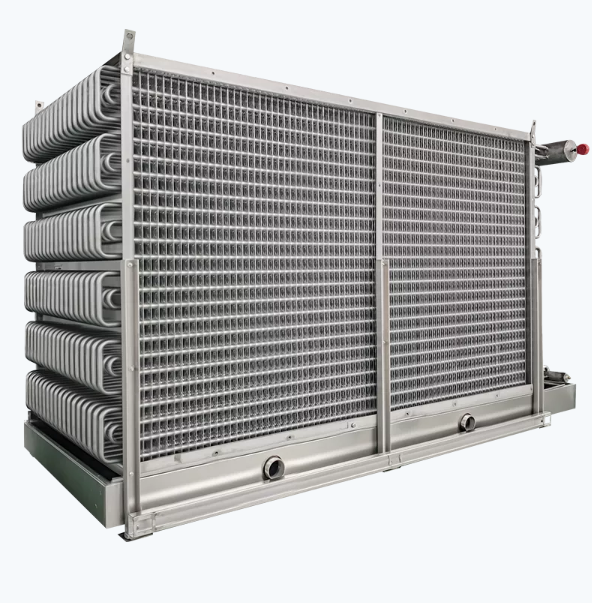
In an IQF system, products are rapidly frozen by circulating them in high-velocity, super-cold air. The blast freezer evaporator lowers the temperature quickly, typically reaching -18°C within hours. This quick freeze minimizes the time products spend in the freezing phase, ensuring that ice crystals remain small and do not damage the food’s cellular structure.
Blast freezer evaporators ensure that each product is uniformly frozen by maintaining even airflow and optimized temperature control. These systems are crucial in achieving the rapid cooling required for IQF, and they help prevent any large ice crystals from forming, thus maintaining product integrity.
One of the primary roles of blast freezer evaporators is to prevent dehydration during the freezing process. Dehydration occurs when water inside the product evaporates, leaving behind a dry, unappealing texture. By maintaining a constant, low temperature, evaporators ensure that the moisture remains locked within the food.
This is crucial for maintaining the product's texture and preventing the formation of large ice crystals that can rupture cells and lead to significant moisture loss. The result is food that retains its original quality, whether it's thawed for cooking or serving.
IQF freezing relies on fluidization, a process where food products are suspended in high-velocity air streams. This technique ensures that each item is surrounded by cold air, freezing it individually without the risk of clumping together. Blast freezer evaporators play a critical role in fluidization by ensuring that the air temperature is uniform and consistent across the freezing chamber.
By maintaining this even airflow, blast freezer evaporators help optimize the cooling process, further preventing the risk of product damage and dehydration. Additionally, their precise design, with features such as customizable fin-tube configurations and anti-microbial surface treatments, ensures that even the smallest products are frozen quickly and uniformly.
The key to successful IQF freezing is efficient airflow. Blast freezer evaporators feature advanced airflow systems that circulate cold air evenly throughout the freezer, ensuring that every product is frozen uniformly. This helps maintain the integrity of each product and ensures that no items are under- or over-frozen, which can affect quality.
Temperature control is equally important, as blast freezer evaporators need to maintain the correct temperature for each product. Consistent temperature management helps ensure that products retain their flavor, texture, and nutritional value during freezing.
Modern blast freezer evaporators use advanced cooling technologies to optimize performance. These include variable-speed compressors, high-efficiency fans, and refrigerant distribution systems that reduce energy usage while maintaining rapid cooling speeds. By using these technologies, businesses can achieve the energy savings they need without sacrificing performance.
Efficient cooling technology also reduces the overall energy consumption of the freezing process. This translates into lower operational costs while still ensuring high-quality freezing of individual items.
Given the harsh conditions in which they operate, blast freezer evaporators must be built from durable, corrosion-resistant materials. Stainless steel and other robust materials ensure that the evaporators continue to perform efficiently over time, even in high-humidity environments.
Corrosion resistance is crucial for maintaining the long-term performance of the evaporators and reducing the need for costly repairs or replacements. These durable materials ensure that the evaporators continue to meet the demands of IQF freezing applications for years.
Feature | Description |
Airflow Design | Even distribution of cold air to ensure uniform freezing |
Temperature Control | Maintains optimal temperature for preventing ice crystal damage |
Energy Efficiency | Uses advanced cooling technologies to minimize energy usage |
Durability | Built with corrosion-resistant materials for long-term use |
The primary benefit of blast freezer evaporators in IQF technology is their ability to preserve product quality and texture. By freezing products quickly and uniformly, the evaporators prevent the formation of large ice crystals, which can damage the food’s cellular structure. This preserves the product’s texture, making it more appealing when thawed or cooked.
One of the key benefits of IQF freezing is its ability to reduce waste. Since each product is frozen individually, consumers can take out only the portion they need, avoiding unnecessary waste. Blast freezer evaporators play an essential role in ensuring that the food is frozen quickly and safely, maintaining both its quality and food safety standards.
Furthermore, the rapid freezing process halts bacterial growth, reducing the risk of contamination and ensuring the product remains safe for consumption.
While blast freezers require an initial investment, the efficiency they offer makes them a cost-effective option in the long run. By using less energy, reducing waste, and improving the quality of products, businesses can realize significant savings. Furthermore, their ability to freeze products faster leads to higher throughput and operational efficiency, contributing to overall profitability.
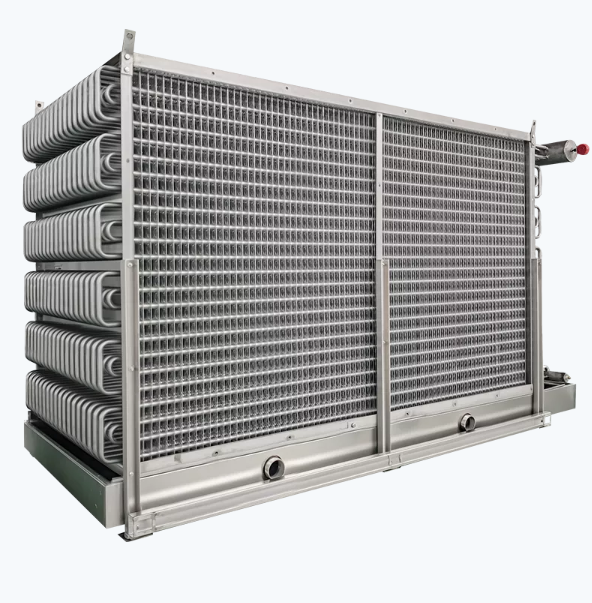
When selecting a blast freezer evaporator, several factors should be considered. The cooling capacity, airflow design, and refrigerant type all play a role in ensuring that the system meets the needs of your specific products. Additionally, the size and configuration of the evaporator should be tailored to fit your operational requirements.
It’s also essential to consider the energy efficiency of the evaporator to keep long-term costs low while maintaining optimal freezing performance.
Choosing between vertical and horizontal evaporators depends on your operational needs. Vertical evaporators are ideal for large-scale applications, where rapid and uniform cooling is essential. Horizontal models, however, are often more space-efficient and are better suited for smaller, specialized applications.
Each design has its own set of advantages, so it’s important to consider the space availability and volume requirements when making your choice.
Feature | Vertical Evaporators | Horizontal Evaporators |
Cooling Efficiency | High efficiency for large-scale applications | Space-efficient for smaller operations |
Air Distribution | Optimized for uniform cooling across large volumes | More compact but still effective |
Space Requirements | Requires more vertical space | Fits well in areas with limited space |
Best For | High-volume freezing (e.g., large food production) | Small, specialized freezing operations |
The food industry is the largest user of IQF freezing technology. It’s especially valuable for preserving products like fruits, vegetables, seafood, and pre-cooked meals. By using blast freezer evaporators, businesses can offer consumers high-quality frozen products that retain their original texture, flavor, and nutrients.
IQF freezing is also critical in the pharmaceutical industry. Blast freezer evaporators help maintain the integrity of temperature-sensitive products such as vaccines, biologics, and medical samples. By freezing these products quickly and uniformly, the evaporators ensure that their potency and quality are preserved for longer periods.
In the catering and food service industries, IQF technology is used to freeze portions of food, ensuring quick thawing and minimal waste. The use of blast freezer evaporators guarantees that food maintains its quality, even when stored for extended periods.
Blast freezer evaporators are essential in IQF technology. They freeze products quickly, preserving quality by preventing large ice crystals. These evaporators optimize airflow, temperature control, and cooling efficiency, ensuring consistent product quality.
As technology evolves, further advancements will improve freezing efficiency and energy consumption. The future of IQF technology promises even faster, more energy-efficient freezing, benefiting businesses and the environment.
At Stelx, our high-performance blast freezer evaporators are designed to meet diverse freezing needs, offering energy efficiency and enhanced freezing capabilities for improved product preservation.
A: A blast freezer evaporator is a cooling system that rapidly freezes products to preserve their quality. In IQF technology, it helps maintain texture, flavor, and nutrients by preventing large ice crystals from forming.
A: Blast freezer evaporators are crucial for achieving quick and uniform freezing. They ensure that each product is frozen individually, preserving its quality and preventing dehydration or cell damage.
A: Blast freezer evaporators optimize airflow, temperature control, and cooling efficiency, which helps achieve faster freezing while reducing energy consumption and maintaining product quality.


