Views: 0 Author: Site Editor Publish Time: 2026-01-15 Origin: Site
Choosing the right industrial air cooler can make a significant difference in your facility’s performance. With so many options available, how do you know which one suits your needs best?
In this article, we will discuss the key factors to consider when selecting an industrial air cooler. You’ll learn about cooling capacity, energy efficiency, and how to match the cooler to your facility’s specific conditions.
Stelx offers reliable and customizable air cooling solutions that can help optimize your facility’s cooling needs.
The size of the area you need to cool is one of the most critical factors in selecting an industrial air cooler. Larger spaces will require more powerful units to ensure proper airflow and cooling. To determine the ideal air cooler size, measure the square footage and ceiling height of the area to estimate the volume of air needing to be cooled. Air cooler capacity is generally rated in CFM (Cubic Feet per Minute) or CMH (Cubic Meter per Hour).
For instance, a typical industrial air cooler needs to supply at least 2,000-3,000 CFM to cool a medium-sized warehouse effectively. If your space has high ceilings or a complex layout with many walls or partitions, you may need a more powerful cooler to ensure the air circulates properly. Larger or irregularly shaped areas require more airflow, so choosing a cooler that provides adequate capacity is essential.
If you’re unsure about the required airflow for your facility, it’s always a good idea to consult with a cooling expert who can help you select the right unit.
Tip: Always choose a cooler with a higher capacity than necessary to account for factors like poor insulation, high outdoor temperatures, or varying operational needs.
Every facility has unique conditions that can affect cooling needs. For instance, factories with large machinery generate substantial heat, which directly impacts the cooling requirements. Additionally, the presence of high equipment density, such as in manufacturing plants or data centers, means a cooler that can handle higher heat loads will be necessary.
The climate and humidity levels in your region are also crucial factors to consider when selecting a cooling system. If your area is prone to high humidity, an evaporative cooler might not be effective. Instead, you may need to opt for a refrigerant-based cooler, which performs better in more humid environments.
Different types of cooling solutions are needed depending on whether you need to cool the entire facility or just specific areas. Spot cooling is ideal for localized cooling, such as cooling specific machinery or areas where workers experience heat stress. Portable air coolers are a flexible solution for such spot cooling applications.
On the other hand, continuous cooling is best achieved with larger, fixed air coolers. These coolers are designed to maintain a consistent temperature across the entire facility. For large warehouses or production plants, fixed systems are the most reliable solution for long-term cooling, ensuring that every corner of the facility remains at the optimal temperature.
For instance, warehouses that only need cooling in specific sections or temporary spaces can benefit from portable air coolers. However, factories or processing plants with high cooling demands will require permanent, installed systems for better airflow and more consistent cooling performance.
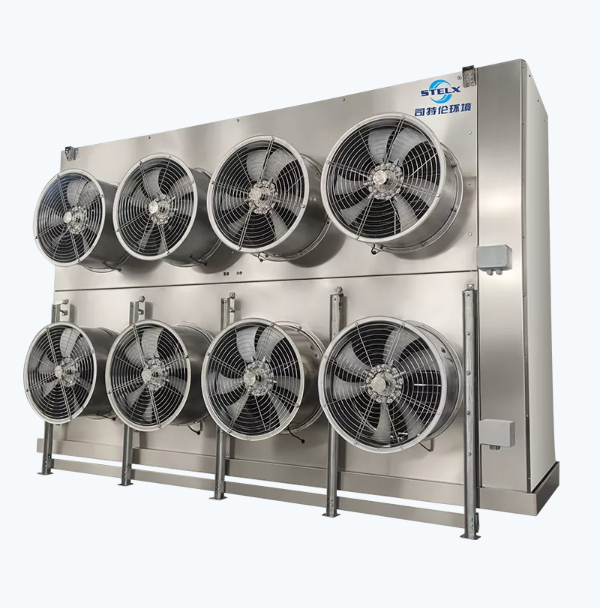
● Portable Coolers: These units are mobile, making them perfect for smaller spaces or temporary use in various areas of a facility. Portable coolers are easy to install and relocate, making them a flexible solution for ever-changing industrial needs. However, they typically offer lower airflow and cooling capacity than installed systems, making them better suited for smaller applications or temporary cooling needs.
● Installed Coolers: Fixed air coolers, such as ceiling-mounted or wall-mounted units, are ideal for larger spaces where constant and high-powered cooling is required. These coolers typically have higher airflow rates and are more effective at cooling large areas. Fixed air coolers are designed for permanent installation, ensuring long-term, reliable performance.
When selecting between portable and installed coolers, consider factors like the size of the area, the cooling demands, and the facility's layout. Portable coolers offer flexibility, but installed units deliver greater performance for larger, more demanding spaces.
Evaporative coolers work by passing air over water-saturated pads, causing the water to evaporate and absorb heat from the air. These coolers are highly energy-efficient and environmentally friendly, but they are best suited for dry climates. In these conditions, evaporative coolers can lower air temperature effectively by using the natural process of evaporation.
In more humid environments, evaporative coolers may struggle to provide adequate cooling because the water evaporation process becomes less efficient. In such cases, refrigerant-based coolers are a better option. These coolers use refrigerants to cool the air, and they perform well in humid environments. However, they tend to consume more energy than evaporative systems, and their maintenance costs are generally higher.
Feature | Evaporative Coolers | Refrigerant-Based Coolers |
Energy Efficiency | Highly energy-efficient in dry climates | Less energy-efficient, especially in humid climates |
Ideal Environment | Best for dry climates | Best for humid environments |
Cooling Method | Uses evaporation to cool air | Uses refrigerants to cool air |
Maintenance Costs | Lower maintenance costs | Higher maintenance costs due to refrigerants |
Installation | Simple installation, portable options available | Typically requires more installation effort |
The airflow capacity of an industrial air cooler is crucial for determining how well the cooler can circulate air. High airflow ensures that cool air is distributed evenly throughout the space. Larger spaces will require air coolers with higher airflow capacities. Ensure the unit you choose can move enough air to keep your facility cool and comfortable.
Air coolers with robust designs that incorporate advanced airflow engineering ensure that even large, demanding spaces get optimized cooling. The flexibility of systems with multiple refrigerant options, such as ammonia or CO₂-based coolers, provides tailored solutions for facilities with high cooling requirements.
Energy efficiency plays a significant role in the long-term operational costs of an industrial air cooler. Look for models that have ENERGY STAR certification or high-efficiency motors, which are designed to minimize power consumption without sacrificing performance. An energy-efficient cooler can help reduce overall operational costs, providing significant savings on electricity bills over time.
In addition to energy efficiency, you should also consider features like smart controls and variable speed fans, which can further help reduce energy consumption and improve cooling performance.
Cooler Type | Energy Efficiency | Ideal Environment | Long-Term Savings Potential |
Evaporative Coolers | Highly efficient in dry climates | Dry, hot climates | Significant savings due to low power consumption |
Refrigerant-Based Coolers | Less energy-efficient in warm conditions | Humid climates, areas with high heat | Higher energy costs but efficient in humid areas |
Given the harsh conditions of many industrial environments, it’s essential to choose an air cooler made from high-quality, corrosion-resistant materials. Stainless steel or other durable metals will ensure the cooler can withstand exposure to moisture, heat, and dust. Additionally, a maintenance-friendly design will save time and money on repairs and upkeep.
Coolers that are engineered for demanding environments can also integrate modular configurations, providing flexibility and scalability as your cooling needs evolve.
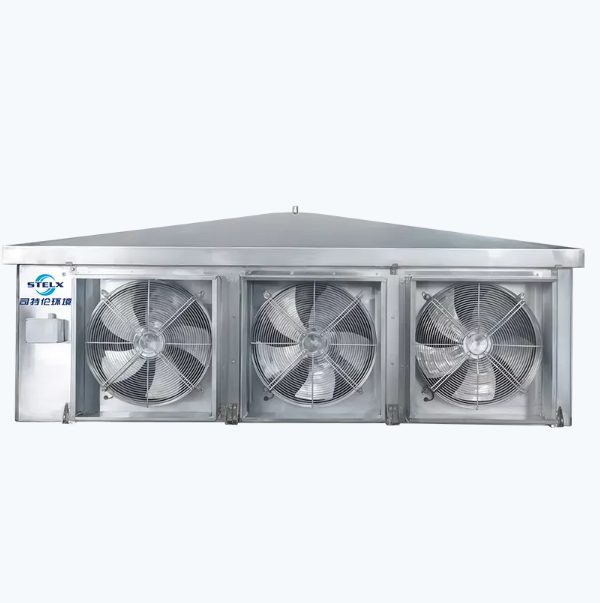
The performance of an air cooler is greatly influenced by the ambient temperature and humidity. Evaporative coolers are most effective in dry climates and are less efficient in humid conditions.
When choosing a cooler, be sure to account for the local climate. If your area is prone to high humidity, you may need a refrigerant-based cooler or a hybrid system for optimal results.
Evaporative coolers rely on cooling pads to absorb heat and evaporate water. The efficiency of the pads affects the cooler’s overall performance. High-quality pads are essential for maximizing cooling performance.
Additionally, water usage is another important factor. While evaporative coolers consume more water than refrigerant-based coolers, modern systems are designed to be water-efficient, helping to reduce overall water consumption.
The installation of your industrial air cooler depends on the layout of your facility and cooling needs. Options include roof-mounted, wall-mounted, or portable units. Fixed units provide long-term, reliable cooling, but portable units are better for flexibility in smaller spaces or temporary applications.
While some models can be installed DIY, professional installation ensures the system is set up according to industry standards, optimizing performance and safety. Proper installation also helps maintain the warranty and extends the cooler's lifespan.
Industrial air coolers vary in price based on size, type, and features. Evaporative coolers are typically more affordable initially, but they offer lower operational costs in the long term, especially in dry climates.
Refrigerant-based coolers, in contrast, might come with higher upfront costs but provide better performance in humid climates.
When evaluating coolers, always consider the cost of maintenance. Some air coolers are low-maintenance, while others with more complex systems may require more frequent servicing. It’s important to choose a model that offers reliable after-sales support and easy access to spare parts.
Cooler Type | Maintenance Frequency | Common Maintenance Needs | Long-Term Cost |
Evaporative Coolers | Low | Cooling pads, filter cleaning | Low long-term cost, easy maintenance |
Refrigerant-Based Coolers | High | Refrigerant refills, compressor maintenance | High long-term cost, more parts to service |
Choosing the right industrial air cooler involves understanding your facility’s cooling needs, including space size, environmental factors, and energy efficiency. Whether you need portable units for flexibility or installed systems for large-scale cooling, the right cooler can enhance durability, reduce energy costs, and improve productivity. Stelx offers customizable, efficient air coolers that meet diverse industrial needs, helping optimize your facility's performance and energy savings.
A: When choosing an industrial air cooler, consider factors such as cooling capacity, the size of the area, ambient temperature, and humidity levels. Make sure to select a cooler that meets the airflow and cooling needs of your space.
A: Evaporative coolers are more energy-efficient and ideal for dry climates, while refrigerant-based coolers perform better in humid environments but consume more energy.
A: Larger facilities require air coolers with higher CFM ratings to ensure proper airflow and cooling. Ensure the cooler's capacity matches the space's size and layout.
A: Yes, regular maintenance is essential for long-term performance. Look for models with easy-to-clean filters and replaceable parts to ensure optimal cooling efficiency.


