Views: 0 Author: Site Editor Publish Time: 2026-07-27 Origin: Site
Industrial food processing facilities and pharmaceutical cold chains face a constant daily battle. They fight against strict timelines, rapid microbial growth, and inevitable product degradation. Standard cooling methods move far too slowly for high-volume production. This slow pacing leads to severe cellular damage and massive moisture loss in your valuable products.
Blast freezers solve these critical industry challenges through extreme thermal dynamics. They continuously force high-velocity, ultra-cold air across your pallets. This mechanical action rapidly drops the core temperatures of your goods. It preserves quality instantly while locking in essential product weight.
We will bridge the gap between basic engineering mechanics and profitable commercial evaluation. You will discover exactly how airflow, coil architecture, and freezing speed interact. You will learn how these components directly impact your final product yield. We will also explore how they influence energy consumption and your overall facility operations.
A blast freezer accelerates the freezing process by breaking the thermal boundary layer around products using high-velocity airflow.
Rapid freezing promotes micro-crystallization, preventing cell wall rupture and minimizing "drip loss" when the product is thawed.
System efficiency relies heavily on evaporator coil design and fin spacing to manage frost buildup and maintain consistent heat exchange.
Evaluating a system requires looking beyond sheer horsepower to assess airflow management (preventing bypass air).
To grasp the mechanics, we must first define the core equipment properly. Many people mistakenly view these units as simple, oversized cold rooms. However, when exploring what is a blast freezer, you uncover a highly specialized heat-exchange system. Engineers design these units to push products through a critical temperature range aggressively. We call this the "Zone of Maximum Crystallization," which spans from 31°F down to 23°F. Moving through this precise zone quickly dictates your final product quality.
The fundamental difference lies in micro-crystallization versus macro-crystallization. Standard holding freezers rely on slow, gradual temperature drops over many hours. This sluggish pace allows water molecules inside the food to bind together. They form large, jagged ice crystals. These macro-crystals act like tiny knives. They puncture delicate cell walls from the inside out. When you eventually thaw the product, those broken cells leak their internal fluids. This degrades the texture and significantly reduces your saleable weight.
Blast freezing operates on a completely different physical principle. Rapid temperature drops force water molecules to freeze instantly in place. This creates microscopic ice crystals instead of large shards. These tiny structures preserve cellular integrity perfectly. They lock in the original flavor profile and maintain the natural moisture content.
Rapid freezing also plays a massive role in facility compliance and consumer safety. Slow cooling leaves food in the microbial danger zone for extended periods. Extremely fast temperature reduction halts bacterial activity almost instantly. This aggressive approach supports strict HACCP compliance protocols seamlessly. It effectively extends the safe shelf life of your inventory. Processors who adopt this method experience far fewer quality control rejections.
Stationary cold air fundamentally acts as a thermal insulator. Every warm product entering a cold room develops a microscopic halo of warm air around it. We call this halo the thermal boundary layer. When you examine how does a blast freezer work, it centers on violently stripping away this invisible shield. High-speed mechanical fans continuously blow ultra-cold air over the product surfaces. This relentless action removes the insulating halo entirely. It forces a state of constant, aggressive heat transfer.
Meeting strict airflow velocity requirements remains crucial for operational success. Industry standards dictate specific air speeds, usually measured in feet per minute (FPM). You must calculate the precise FPM necessary to achieve your target freezing times. However, pushing air too fast creates unique problems. Excessive velocity without proper humidity control causes surface freezer burn. Finding the perfect balance ensures rapid cooling without dehydrating your exposed goods.
Facility managers often struggle with the expensive problem of "bypass air." Air behaves like water; it always takes the path of least resistance. You might install incredibly powerful fans in your chamber. However, if workers space the pallets incorrectly, the system fails. The high-velocity air simply flows around the product masses rather than passing through them. This wastes massive amounts of electrical energy and ruins batch timing.
Modern engineering provides several robust solutions to combat bypass airflow. Advanced baffling systems physically block empty spaces inside the chamber. Plenum walls force the air currents to move horizontally through the product layers. Many manufacturers now install variable frequency drive (VFD) fans. These smart fans adjust their speed dynamically based on the cooling phase. They direct air precisely through the designated product zones for maximum efficiency.
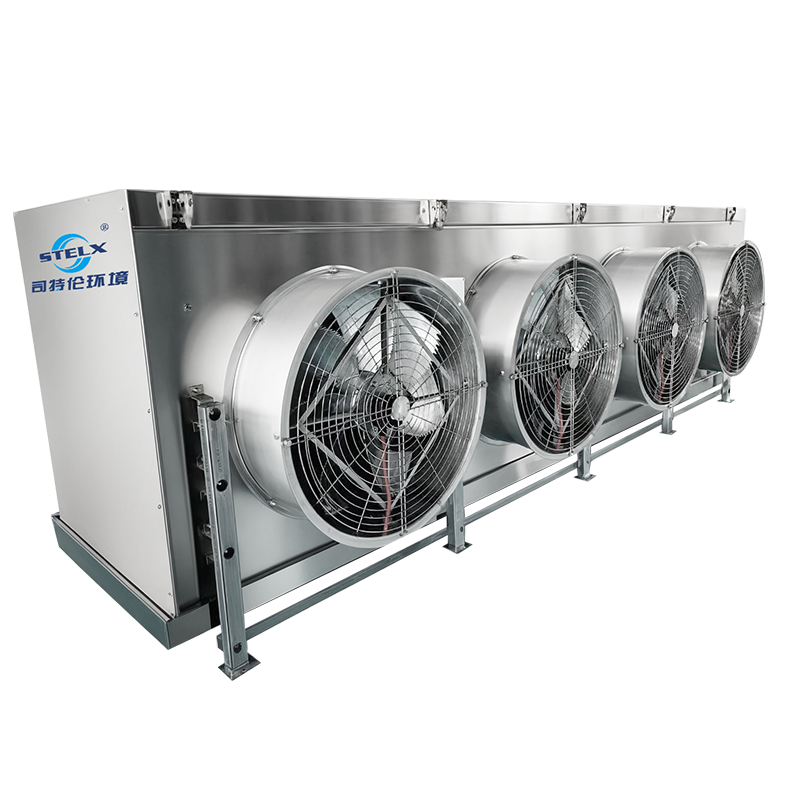
The evaporator coil serves as the beating heart of any industrial cooling system. Liquid refrigerant circulates continuously through these complex metal tubes. The refrigerant physically absorbs ambient heat from the circulating chamber air. Larger coil surface areas generally equate to much faster heat removal capabilities. If you want to understand how blast freezer works internally, you must examine this critical heat exchange mechanism carefully.
Engineers must make difficult trade-offs regarding coil fin spacing. Fins are the thin metal plates attached to the primary refrigerant tubes. Dense fin configurations maximize the total available surface area for heat exchange. This dense design pulls heat rapidly under ideal conditions. However, tightly packed fins remain highly susceptible to rapid frost buildup. Moisture from the products freezes instantly onto these narrow gaps. This chokes the airflow and requires frequent, energy-wasting defrost cycles.
Wider fin spacing offers a much more reliable solution for specific applications. High-moisture goods release massive amounts of steam and vapor during the initial cooling phase. Hot bakery items and fresh meat processing lines demand these wider configurations. The extra space allows the system to handle heavy frost accumulation safely. It guarantees continuous production operation with significantly fewer mandatory defrost interruptions.
No cooling system can completely avoid the reality of ice accumulation. Therefore, specialized defrost mechanisms play a vital role in maintaining daily operational uptime. Hot gas defrost systems temporarily reverse the refrigeration cycle. They send hot refrigerant directly back into the evaporator coils to melt the ice rapidly. Electrical defrost uses dedicated heating elements to achieve the same result. Choosing the right defrost strategy prevents your coils from turning into solid blocks of ice.
Many facility owners misunderstand the core difference in equipment capacity. Standard freezers exist strictly for holding temperatures steady over long periods. Conversely, blast systems exist specifically for pulling down temperatures aggressively. Using a standard freezer for active temperature pulldown creates disastrous consequences. It severely overloads the internal compressor. It also raises the ambient room temperature, which risks spoiling your existing frozen inventory.
Performance Metric | Standard Holding Freezer | Industrial Blast System |
|---|---|---|
Primary Purpose | Maintain existing frozen state | Rapid core temperature reduction |
Airflow Velocity | Low speed, gentle circulation | High speed, aggressive FPM |
Crystallization Type | Macro-crystals (cellular damage) | Micro-crystals (cellular preservation) |
Compressor Load | Steady, low-demand operational cycles | Intense, high-capacity cooling spikes |
Yield preservation remains the most critical metric for calculating financial returns. Standard freezing causes significant cellular damage, leading to massive drip loss upon thawing. Standard methods can easily cause a five to ten percent loss in moisture. For meat, seafood, and poultry processors, lost moisture equals lost product weight. When you sell products by the pound, losing moisture means losing hard revenue. Eliminating this drip loss directly translates to substantially higher profit margins per batch.
We must also acknowledge the stark realities of industrial energy consumption. These high-velocity cooling systems consume massive amounts of electrical power daily. However, evaluating them on raw kilowatt usage alone provides a flawed perspective. You should frame the efficiency argument around the energy cost per pound frozen. A powerful system might draw more electricity per hour. Yet, it freezes batches twice as fast, resulting in a lower actual cost per unit.
Selecting the perfect equipment requires mapping your exact facility constraints. You must carefully balance your required cooling capacity against your available physical footprint. Inline spiral configurations work beautifully for continuous manufacturing processes. They move individual products constantly upwards through the freezing zones. Conversely, batch roll-in units suit facilities moving entire loaded pallets at once. Knowing exactly blast freezer how it works helps you match the mechanics to your specific daily throughput.
Refrigerant compliance dictates the long-term viability of your chosen equipment. Global environmental regulations strictly mandate the phase-down of high-GWP synthetic refrigerants. Purchasing a system reliant on legacy synthetics creates a massive future liability. Smart operators now prioritize natural refrigerant solutions. Ammonia (NH3) offers incredible thermodynamic efficiency for large industrial plants. Carbon dioxide (CO2) systems provide an excellent, environmentally safe alternative for mid-sized commercial operations.
You must carefully assess various implementation risks before signing any purchase orders. Industrial cooling installations expose existing building infrastructure to extreme physical stresses. Consider these mandatory facility requirements:
Verify your existing concrete slab features proper thermal insulation to prevent destructive floor heaving.
Confirm your facility possesses the electrical amperage necessary to support massive, rapid pulldown loads.
Check if your drainage systems can safely handle the heavy water volume generated during automated defrost cycles.
Ensure your structural steel can support the immense hanging weight of industrial evaporator coils.
Your immediate next step requires precise data collection. Never request vendor quotes or engineering capacity calculations without your numbers ready. You must thoroughly map your exact product specifications first. Document your precise entry temperatures and your required target exit temperatures. Measure your exact packaging dimensions and calculate the total initial moisture content of your goods.
Mastering these thermal dynamics completely transforms your production capabilities. The science of rapid freezing relies on a remarkably precise balance. It requires perfect harmony between airflow management, coil efficiency, and advanced thermodynamics. Every single component must align perfectly to push your products through the critical crystallization zone safely.
Facility managers must look past the initial sticker price of new equipment. The absolute cheapest system upfront almost always costs you the most over time. Underpowered units result in painfully extended freeze times and terribly poor product yields. They also demand excessive, constant maintenance that destroys your operational uptime.
Take a proactive approach to your refrigeration strategy today. We strongly recommend consulting with experienced thermal engineering experts immediately. Have them physically model your specific product's unique freezing curve. This specialized data allows them to design and implement a perfectly right-sized solution for your facility.
A: A blast freezer utilizes high-velocity fans to force ultra-cold air continuously across products. It actively strips away the warm thermal boundary layer. This aggressive heat removal process drops core temperatures in hours rather than days. Standard freezers lack this airflow capacity and only maintain previously frozen items.
A: Freezing times vary drastically based on product thickness and entering temperature. Small, individually quick-frozen (IQF) items like berries can freeze entirely in mere minutes. Conversely, densely packed, palletized meat boxes may require 24 to 48 hours of continuous high-velocity airflow to freeze completely solid.
A: Industrial blast systems typically operate at extremely low air temperatures ranging from -30°F to -40°F (-34°C to -40°C). These ultra-low operating points ensure the equipment maintains a severe temperature differential. This wide gap forces the rapid heat transfer necessary for achieving maximum micro-crystallization within the food.
A: Not without careful consideration. While most foods benefit from rapid freezing, proper packaging remains absolutely crucial. Unwrapped or exposed items will suffer severe surface dehydration and freezer burn due to the intense airflow. Engineers must match the system's air speed to your specific packaging type.