Views: 0 Author: Site Editor Publish Time: 2026-08-18 Origin: Site
High-bay automated storage and retrieval systems (ASRS) uniquely maximize vertical footprints. However, they inherently complicate complex refrigeration dynamics. Poor airflow design in these towering facilities rapidly leads to thermal stratification. It extends freeze cycles and inflicts severe energy penalties. At the critical decision stage of a facility upgrade, selecting the right airflow architecture matters. It is just as critical as the refrigeration plant itself. Relying purely on standard cooling calculations frequently results in performance failures. You cannot ignore racking geometry. This guide outlines exactly how to evaluate and specify optimal freezer designs. We show you how to guarantee uniform airflow and meet stringent energy compliance standards. You will learn to deliver a verifiable return on investment in challenging environments. Properly engineered airflow protects your inventory and ensures consistent daily operations.
Airflow is hindered by high-density racking: Success requires specific flue space management and fan-throw configurations to penetrate ASRS structures.
Evaporator placement dictates efficiency: Penthouse enclosures versus ceiling-hung units carry distinct structural and maintenance trade-offs.
CFD modeling is a prerequisite: Predictive thermal mapping prevents costly retrofits by validating airflow dynamics before construction.
Vendor evaluation must focus on integration: Shortlist contractors who demonstrate expertise linking custom evaporator designs with your specific racking architecture and existing refrigeration systems.
High-bay environments often soar well over 100 feet tall. They naturally create highly problematic microclimates. Warm air naturally rises toward the ceiling. Dense product loads physically block natural convection currents. Without optimized air distribution, facilities suffer heavily from short-cycling. Short-cycling occurs when chilled air returns prematurely to the evaporator. It bounces off the nearest pallets instead of penetrating the racking. This creates severe thermal stratification across different vertical levels.
Operational consequences hit the bottom line hard. You will observe wildly inconsistent freeze times across different pallet positions. Product quality degrades rapidly under these conditions. This increases your USDA and FDA compliance risks substantially. Regulators monitor core temperature targets strictly. Slow freezing damages cellular structures in sensitive food products. Moisture loss ruins product weight and visual appeal.
Furthermore, poor airflow accelerates dangerous frost buildup. Frost accumulates quickly on ASRS cranes. It blocks sensitive optical sensors and rails. This causes frequent, expensive mechanical downtime. Your maintenance teams spend hours de-icing equipment manually. Meanwhile, compressors must work much harder. They attempt to compensate for poor air circulation. They draw excessive amperage continuously. This drives up your monthly utility costs exponentially.
A correctly engineered blast freezer room must solve these physics problems entirely. It must achieve uniform core temperature targets perfectly. It must hit these targets within highly specific production timeframes. Furthermore, it should utilize the absolute lowest possible fan motor horsepower. This ensures optimal system longevity and drastically reduces electrical overhead.
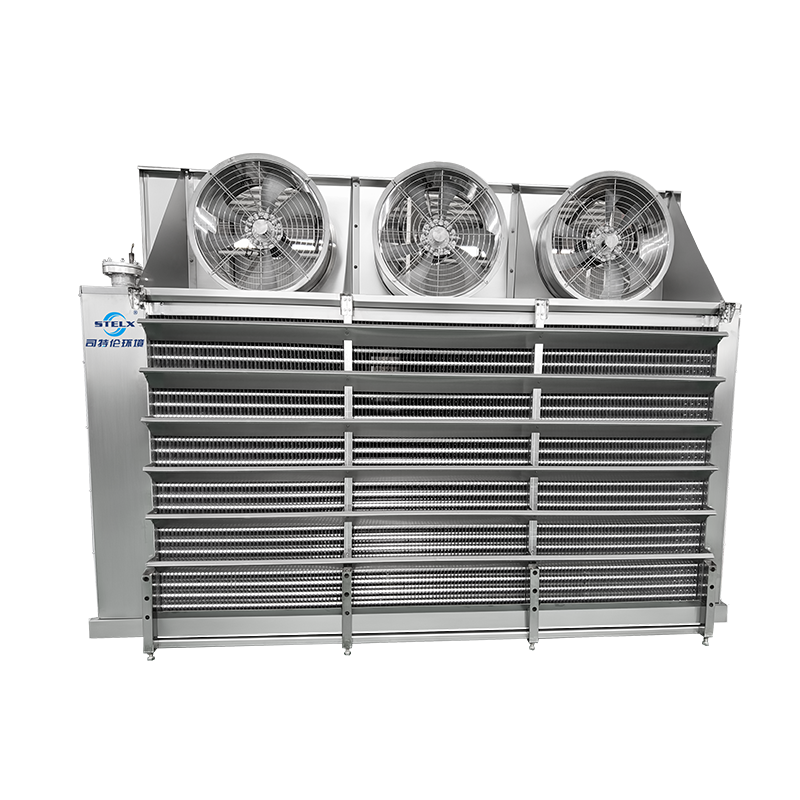
Selecting the right mechanical components dictates your overall system success. Evaporator selection and coil design form the structural foundation. You must evaluate fin spacing carefully. Base this crucial decision on the facility's specific moisture load. Wider fin spacing minimizes rapid frost bridging. It drastically reduces your daily defrost cycles. You must also assess different refrigeration feed architectures. Direct expansion (DX) offers lower initial refrigerant charges. However, flooded liquid overfeed systems excel in large-scale applications. They provide vastly superior heat transfer rates. This makes them ideal for an industrial blast freezer.
Fan performance determines actual air penetration. High-bay layouts require highly specialized equipment. You need robust, high-static pressure fans. They force heavy, sub-zero air through incredibly dense pallet loads. Standard axial fans simply fail in these environments. The static resistance proves too high. You must also evaluate Variable Frequency Drives (VFDs) capability. VFDs allow precise part-load operation. They critically reduce energy consumption during holding periods. Once the initial blast cycle concludes, you do not need full velocity. Running fans at full speed constantly wastes immense energy.
Equipment placement directly impacts your building structure. It also dictates long-term maintenance access. You typically choose between penthouse enclosures and ceiling-hung configurations. Each carries distinct engineering trade-offs.
Configuration Model | Primary Advantages | Notable Drawbacks |
|---|---|---|
Penthouse Evaporators | Does not consume rack space. Maintenance occurs safely outside the cold zone. | Requires significant structural roof reinforcement. Higher initial ducting costs. |
Ceiling-Hung / In-Rack Units | Lower upfront capital investment. Provides direct air application to pallets. | Consumes highly valuable pallet positions. Exposes maintenance teams to extreme cold. |
Dense ASRS racking blocks standard airflow paths completely. You must optimize internal aerodynamics to achieve rapid freezing. Flue space management requires pinpoint structural precision. Transverse and longitudinal flue spaces must align exactly across the fan throw trajectory. Misalignment creates localized wind tunnels. The high-velocity air simply bypasses your product entirely. It follows the path of least resistance.
Consider these critical steps for racking alignment:
Demand minimal clearance tolerances from your racking vendor early. Target 3-6 inches strictly for all vertical flues.
Audit the expected pallet overhang margins. Excess shrink wrap or carton overhang physically blocks vertical flues.
Synchronize automated crane operation paths. Avoid obstructing main air streams during peak cooling cycles.
Plenum and baffle design physically control the air path. Use structural false ceilings and discharge plenums. They guide high-velocity air directly into the pallet matrix. Implement sturdy return air baffles. Baffles force returning air directly through the product boxes. They prevent cold air from lazily short-circuiting over the top of the racking. Proper baffling guarantees uniform heat removal from every single tier.
Computational Fluid Dynamics (CFD) completely changes the engineering landscape. Always require vendors to provide CFD modeling during the initial proposal phase. CFD provides empirical, visual validation of air velocity. It maps exact temperature gradients across the entire cold storage blast freezer. This technology eliminates expensive architectural guesswork. It visualizes exactly how air interacts with your specific product load. Predictive thermal mapping prevents disastrous retrofits after construction concludes.
Modern high-bay facilities must balance raw cooling power carefully. You face strict national and regional energy codes. Ensure your design aligns strictly with DOE regulations. Regional codes, such as California Title 24, dictate strict fan efficiency minimums. Evaluate lifecycle efficiency using empirical energy models. Avoid relying on best-case scenario marketing claims from equipment vendors. Real-world modeling reveals your actual operational burdens.
Defrost cycle management heavily impacts your daily efficiency. Compare hot gas versus electric defrost methods carefully. Hot gas remains highly efficient for large ammonia or CO2 central plants. It utilizes compressor waste heat highly effectively. It melts coil ice rapidly from the inside out. Electric defrost might only remain viable for smaller, completely isolated circuits. It draws heavy amperage constantly. It introduces unnecessary resistive heat into the space.
Implement advanced demand-defrost controls. Sensor-driven defrosting relies purely on actual frost accumulation. It smartly ignores arbitrary mechanical timers. This prevents unnecessary heat introduction into the highly engineered warehouse blast freezer. Frost sensors detect minor static pressure drops across the coil fins. They initiate defrost cycles only when physically required by the ice load. This automated strategy saves thousands of dollars in annual utility spending. It also stabilizes room temperatures significantly.
Complex high-bay installations carry distinct integration risks. Structural mismatch occurs frequently during the design phase. Penthouse units require massive roof load reinforcement. They contain heavy coils, fans, and structural steel enclosures. Failing to engineer this early delays building projects by several months.
Integration failures plague many modern builds. A lack of communication between the ASRS racking provider and the refrigeration engineer spells absolute disaster. Blocked airflows ruin freeze times immediately. Furthermore, undersizing central plant capacity causes system-wide cascading failures. Engineers often fail to account for massive peak load spikes. A freezing cycle demands extreme, sudden power from existing compressors. It can starve other operational storage rooms of necessary cooling.
Use strict shortlisting criteria for your design-build partners. Ask them these specific technical questions:
Do they possess documented case studies of high-bay ASRS deployments?
Can they provide transparent efficiency calculations? They must balance evaporator fan power directly against compressor power.
Do they handle all controls integration and PLC programming in-house?
The system must communicate seamlessly with your warehouse management system (WMS). The WMS must signal the refrigeration PLC when hot pallets arrive. Request an engineering site audit immediately. Demand a preliminary CFD simulation based specifically on your proposed racking layout. Complete this vital step before finalizing any equipment procurement.
Designing a high-bay storage refrigeration system requires precise air management. It goes far beyond calculating raw cooling power. System success hinges on perfectly integrating evaporator placement, fan statics, and racking geometry.
Base all procurement decisions purely on predictive CFD modeling.
Focus strictly on empirical energy validation rather than basic marketing sheets.
Ensure flawless PLC integration between your WMS and refrigeration controls.
Prioritize strict flue space alignment to guarantee core temperature compliance.
Take action before finalizing your facility blueprints. Contact our expert refrigeration engineering team today. We provide comprehensive technical evaluations of your high-bay cold storage design plan. Let us validate your specific airflow strategy before you build.
A: It varies heavily by specific design. However, it typically requires high-static fans capable of throws exceeding 100 feet. You must support these fans with targeted plenum designs. This maintains proper air velocity deep through the dense racking structure.
A: ASRS structures are significantly denser and much taller. They often utilize automated cranes. These cranes disrupt traditional airflow paths completely. This density necessitates highly precise vertical and horizontal flue space alignment. It makes CFD modeling absolutely mandatory.
A: For large-scale industrial operations, yes. They recover lost pallet spaces effectively. This maximizes your total storage density. They also significantly improve maintenance safety. Technicians service units outside, keeping them out of dangerous sub-zero environments.